
Vulnerable Passengers During IROPS: The Operational Gap Airlines Cannot Afford to Ignore
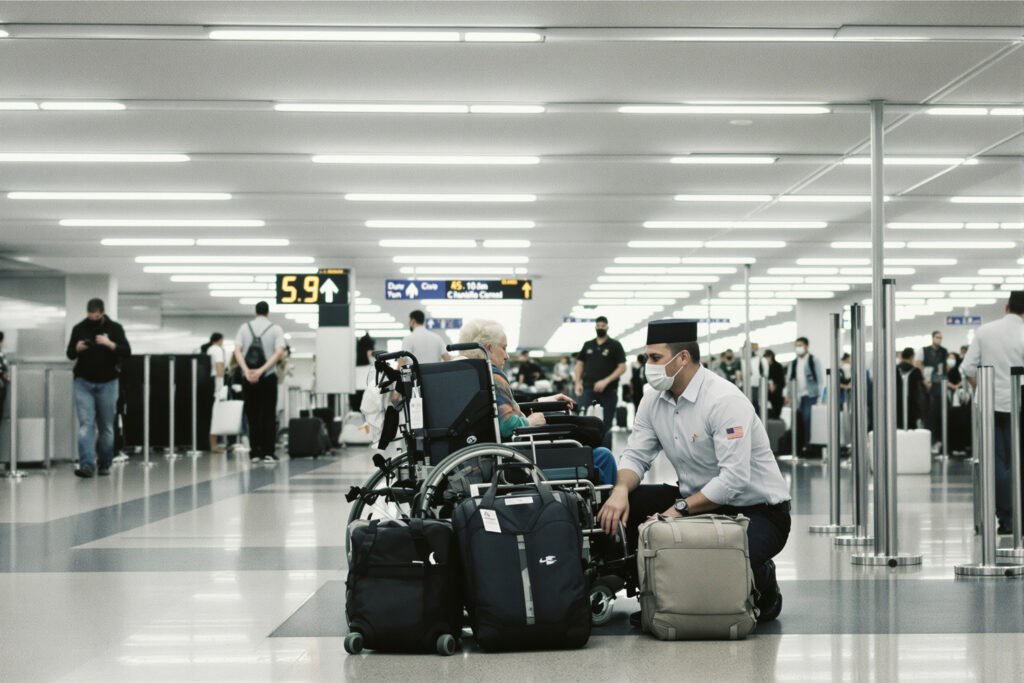
Why vulnerable passengers fall through the gap during IROPS
Airline operations teams are trained to move fast under pressure. When a disruption hits, the immediate focus goes to aircraft, crew legality, slot recovery, and accommodation logistics. That is appropriate. But the speed of that response tends to flatten the passenger group into a single undifferentiated mass, and that is where the operational risk with vulnerable travellers begins.
Passengers with reduced mobility, unaccompanied minors, travellers requiring medical assistance, elderly passengers without a companion, and others with specific needs are present on almost every commercial flight. Under normal conditions, these passengers are managed through structured pre-boarding processes, dedicated staff, and clear handover protocols. The moment a disruption is declared, most of those structures stop working. The staff assigned to assist them are pulled toward other tasks. The systems that flagged their needs in the departure flow are no longer driving anyone’s actions.
What replaces those structures in most airlines is nothing specific. Vulnerable passengers enter the same reaccommodation queue, receive the same generic communication, and are directed to the same coaches and hotel lobbies as every other passenger. In many cases, that is simply not adequate.
The regulatory baseline is not the operational standard
EU261 and the associated EU1107/2006 regulation on disabled passengers and passengers with reduced mobility set minimum obligations. Airlines broadly understand these obligations in the context of normal operations. The problem is that during IROPS, the chain of responsibility becomes unclear very quickly.
When a flight diverts to an alternate airport, who is responsible for ensuring that a passenger with reduced mobility has appropriate assistance on arrival? When a cancellation triggers overnight accommodation, who verifies that the hotel assigned to an unaccompanied minor has the capability and staff to receive them safely? When a long delay stretches into the early hours at a remote terminal, who is tracking the medical needs of a passenger who flagged a condition at check-in?
These questions should have named answers in your IROPS response plan. In practice, they often do not. The regulatory framework assumes a level of operational continuity that disruption, by definition, breaks.
For a broader view of how EU261 shapes the decisions operations teams face during disruption, the post on EU261 and IROPS: How the Regulation Actually Shapes Your Operational Decisions covers the operational implications in detail.
What a structured vulnerable passenger protocol actually looks like
Building vulnerable passenger management into your IROPS response is not a welfare exercise. It is an operational and legal risk management decision. The structure needs to exist before the disruption starts, not be improvised during it.
At a minimum, a functional protocol covers the following:
- Identification at point of disruption declaration. When a flight is flagged as disrupted, the manifest data on passengers with special service requests should be pulled immediately and assigned to a named handler, not left in the booking system waiting for someone to remember to check it.
- Physical location tracking. During extended delays or diversions, knowing where vulnerable passengers are in the airport at any given moment is essential. This is especially relevant at airports where the airline has limited or no permanent staff presence.
- Accommodation verification before dispatch. Not every hotel that has available rooms during a disruption is equipped to handle a wheelchair user or an unaccompanied minor. Your accommodation provider needs to confirm capability, not just availability, before a passenger is sent there.
- Transport adapted to specific needs. A standard coach is not always an appropriate solution. Ground transport arrangements for passengers with reduced mobility or medical requirements need to be confirmed in advance, not sorted at the kerbside at midnight.
- Handover documentation. If a passenger with specific needs is reaccommodated, transferred, or handled by a third party, there must be a documented handover. This protects the passenger and protects the airline if the situation is later reviewed.
The diversion scenario is where this fails most visibly
Diversions expose every gap in IROPS preparation, and vulnerable passenger management is among the most acute. When an aircraft lands at an alternate airport, the airline typically has limited or no pre-positioned staff, no pre-arranged contracts with local service providers, and no established relationship with the airport’s own assistance teams.
For a passenger with reduced mobility or a medical need, that situation can deteriorate quickly. The time it takes to arrange appropriate assistance at an unplanned airport is directly proportional to how much prior preparation has gone into building those local contacts.
Airlines that work with an end-to-end IROPS management provider gain meaningful coverage here. A provider with established relationships across European airports can mobilise appropriate ground support, locate accessible transport, and identify hotels with the right facilities far faster than an in-house team operating without local contracts. That is not a marginal difference in a diversion scenario. It is often the difference between a manageable situation and a serious duty-of-care failure.
Duerming’s passenger accommodation service is built around exactly this kind of operational continuity, including the verification steps that generic hotel booking cannot provide.
Training and accountability gaps are also part of the problem
Even where protocols exist on paper, the gap between documented process and actual execution during disruption is often significant. Operations managers who have reviewed their own IROPS incidents after the fact frequently find that vulnerable passenger steps were skipped, not because staff were indifferent, but because the pressure of the moment collapsed the process down to its most visible elements.
This points to a training and accountability design problem, not a character problem. If the vulnerable passenger protocol is a separate checklist that requires a deliberate additional action, it will often not happen under genuine disruption pressure. If it is embedded as a mandatory trigger within the standard IROPS activation sequence, it is far more likely to be executed.
The same logic applies to your external partners. Any accommodation or transport provider handling passengers on your behalf during IROPS should have clear contractual obligations around vulnerable passenger handling, and you should be able to verify that those obligations were met after the fact, not just assumed.
Build it before you need it
Vulnerable passenger management during IROPS will not become a priority through goodwill alone. It needs to be engineered into your response structure with the same rigour you apply to crew legality checks or hotel capacity planning. The passengers who need it most are, by definition, the least able to advocate for themselves in a chaotic operational environment. That makes it an airline responsibility, not a passenger responsibility.
If your current IROPS plan does not have a specific, tested protocol for this group, that is the gap to close first.
Ready to be prepared before the next disruption?
Talk to our operations team about a standing IROPS agreement for your airline.