
Codeshare and Interline IROPS: Why Shared Flights Create Unshared Problems
The Disruption Nobody Pre-Planned For
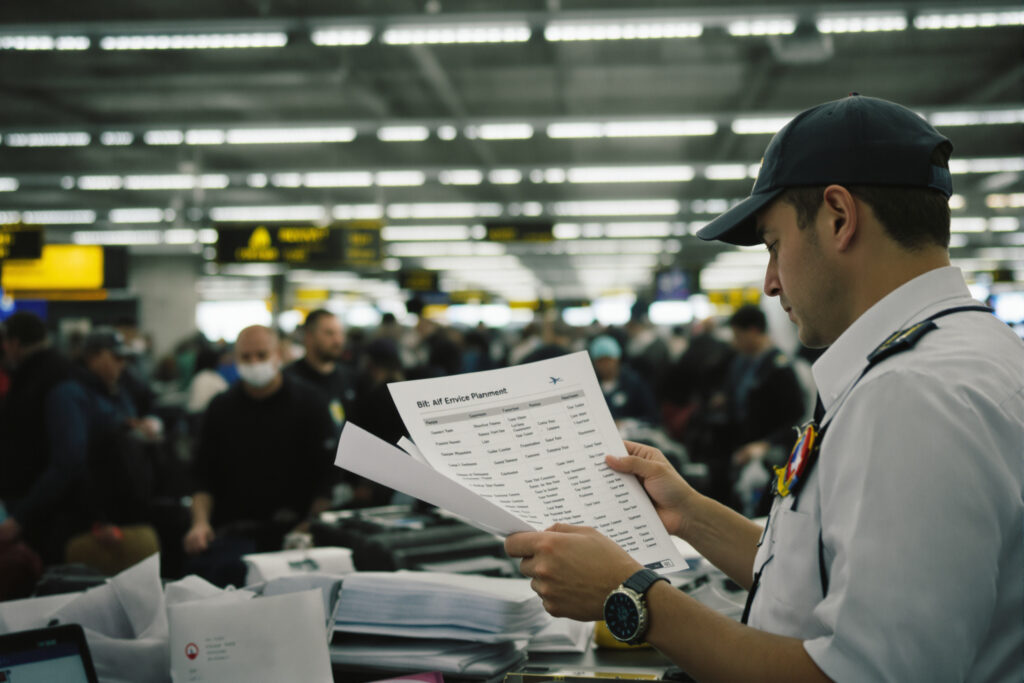
A flight cancels at 23:00. Ground staff pull the passenger list and start working through reaccommodation. What they cannot easily see from that list is how many of those passengers booked through a partner carrier, how many are on interline tickets connecting to a third airline, and which of those itineraries carries service commitments that differ from the operating carrier’s own policies. By the time anyone has mapped that picture, an hour has passed and the queue at the service desk has not shortened.
Codeshare and interline arrangements are a commercial staple of modern aviation. Operationally, they are a disruption liability that most airlines have not adequately prepared for.
Where the Breakdown Actually Happens
The core problem is a mismatch between commercial structure and operational reality. When a disruption occurs, the operating carrier controls the aircraft, the gate, and the ground crew. But a meaningful share of passengers on that aircraft may hold tickets issued by a marketing carrier that has its own duty-of-care obligations, its own customer service standards, and its own system for managing reaccommodation.
In practice, those two systems rarely talk to each other in real time. The operating carrier’s ground team is working from a manifest that identifies seat assignments, not ticket origins. The marketing carrier’s operations centre may not even know the disruption has happened until passengers start calling their customer service line from the terminal.
The gap between those two moments is where the passenger experience falls apart and where compensation exposure begins to build.
Duty-of-Care Is Not Automatically Shared
Under EU261/2004, the obligation to provide care sits with the operating carrier, regardless of which airline sold the ticket. That sounds clean until you factor in the interline passenger whose journey involves a separate ticket for the connecting segment. In that case, the missed connection may not trigger the regulation at all from the operating carrier’s perspective, even though the passenger is stranded.
Marketing carriers, meanwhile, often have their own service commitments embedded in fare conditions or alliance membership rules that go beyond the regulatory minimum. Ground teams at the operating carrier’s station are unlikely to know those commitments exist, let alone have the tools to honour them.
The result is that no one acts with full information, and the passenger ends up bouncing between contact centres while standing in a terminal at midnight.
What Pre-Agreement Between Carriers Actually Requires
Airlines that handle codeshare and interline disruptions well have done the work before the disruption happens. That means interline service agreements that go beyond revenue proration and actually specify operational responsibilities: which carrier activates hotel accommodation, which carrier issues meal vouchers, how costs are documented and later reconciled, and what the escalation path looks like when the two carriers disagree on liability in the moment.
It also means ensuring that ground handling teams at every station where codeshare flights operate have access to those agreements in a usable format, not buried in a commercial contract that nobody on the ramp has read.
For airlines operating across multiple European stations, this is not a trivial coordination task. Different stations may handle the same codeshare partner differently depending on which ground handler is contracted, what the local interline desk setup looks like, and whether the partner carrier has a local representative present. Consistency is rarely the default outcome without explicit process design.
The Reaccommodation Complexity Layer
Rebooking a straightforward point-to-point passenger onto the next available service is operationally manageable. Rebooking an interline passenger whose onward connection is on a separate ticket, operated by a third carrier, requires access to that carrier’s inventory, coordination on the new itinerary, and often a manual process that no automated reaccommodation tool handles cleanly.
In a mass disruption scenario, where dozens of passengers in this situation need handling simultaneously, the manual workload on ground teams becomes unmanageable quickly. Mass reaccommodation logistics are demanding enough with a single-carrier manifest. Add interline complexity and the risk of passengers being left without any confirmed onward routing increases substantially.
Accommodation is often the first thing to break under that pressure. When ground teams are overloaded with rebooking, hotel placement gets delayed or delegated to passengers themselves, which generates both cost and complaints. Having a reliable third-party structure for passenger accommodation that can be activated independently of the rebooking workflow removes one critical task from an already stretched operation.
Information Flow Is the Operational Lever
Much of the codeshare disruption problem is an information problem. The operating carrier’s systems and the marketing carrier’s systems were not built to share real-time operational status with each other. Alert thresholds, passenger notification triggers, and reaccommodation authorisation workflows are all calibrated to a single-carrier model.
Fixing this requires deliberate integration work, or at minimum, agreed manual escalation protocols that specify who calls whom, at what point in the disruption, and with what information. Airlines that have established dedicated IROPS contacts at partner carriers, rather than routing everything through standard customer service channels, consistently report faster resolution and fewer passenger complaints that escalate into formal claims.
The Operational Case for Sorting This Out in Advance
Codeshare and interline disruptions are not edge cases. For any carrier operating within an alliance or with commercial partnerships across Europe, a significant share of disrupted passengers will have some form of interline or codeshare element in their booking. The frequency of that scenario makes pre-agreed protocol a basic operational requirement, not an advanced-level project.
The airlines that treat interline disruption handling as a commercial afterthought tend to discover the gap at the worst possible moment: during a multi-station disruption in peak season, when the partner carrier is also managing its own irregular operations and nobody has the bandwidth to negotiate responsibility from scratch.
Building that protocol now, including clear accommodation activation rights, cost reconciliation processes, and passenger communication ownership, is the kind of preparation that pays back every time a codeshare flight does not go to plan. For airlines operating across European markets, end-to-end IROPS management that accounts for these commercial structures is what separates a controlled disruption from a coordination failure.
Ready to be prepared before the next disruption?
Talk to our operations team about a standing IROPS agreement for your airline.