
Tarmac Delay Protocols: What Airlines Overlook When Passengers Are Stuck on Board
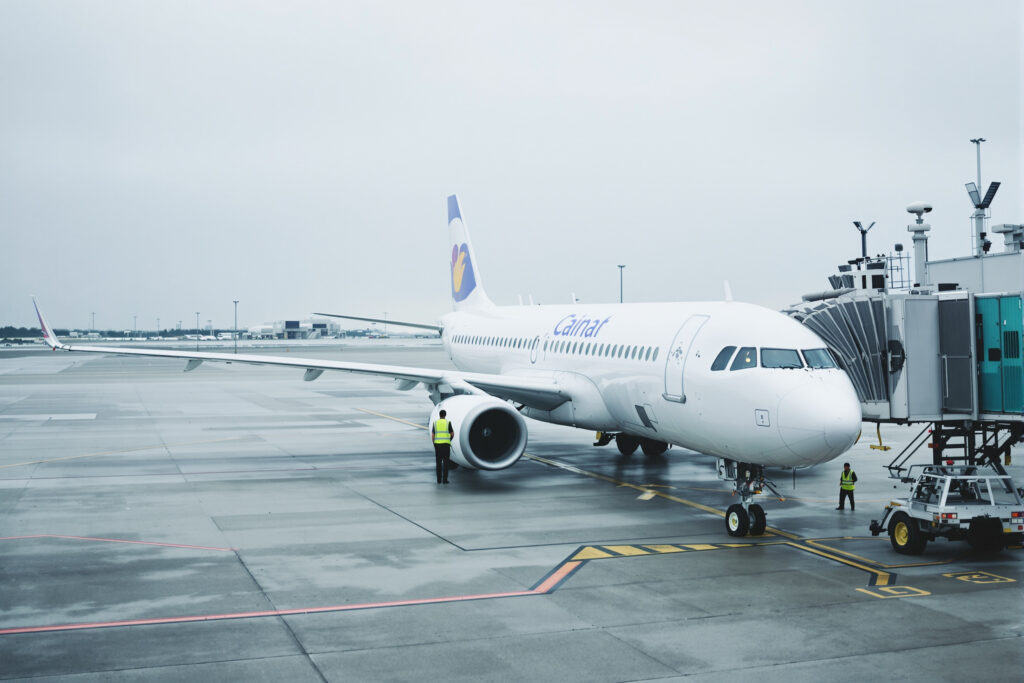
Why Tarmac Delays Deserve Their Own Protocol
Most IROPS planning treats the tarmac delay as a subset of general delay management. It is not. A tarmac delay is a distinct operational scenario with its own regulatory exposure, welfare obligations, and coordination demands. Lumping it in with generic delay procedures is one of the primary reasons airlines find themselves improvising at the worst possible moment.
The distinguishing feature of a tarmac delay is confinement. Passengers cannot self-manage. They cannot find food, access the terminal, or make alternative arrangements. Every minute of uncertainty falls entirely on the airline to absorb. That shifts the operational and reputational stakes considerably compared with a delay inside a terminal.
Operations teams that treat tarmac delay as an edge case rather than a scenario requiring a dedicated, rehearsed protocol tend to discover their gaps at the worst possible time.
The First Hour Is Where Most Failures Are Set in Motion
When an aircraft is held on stand or a remote apron position, the initial instinct from the operations desk is often to wait for more information before escalating. Gate availability, ATC slot recovery, weather lifting, a technical fix that might come through. That instinct is understandable but dangerous.
Welfare obligations begin accumulating from the moment the delay starts, not from the moment it is confirmed as long. Catering assessments, lavatory servicing capacity, temperature management, and passenger communication all need to be initiated early. Waiting for certainty before acting compresses the available response window to the point where good options no longer exist.
The practical question every ops team should be able to answer before a tarmac delay occurs is this: at what internal threshold does the protocol automatically trigger, and who has the authority to activate it without waiting for sign-off from above?
Ground Coordination Gaps That Surface Every Time
Tarmac delay protocols almost always assume that ground handlers will be available and responsive on request. In practice, ground handlers at congested airports are managing multiple aircraft simultaneously. A request for catering top-up, a cleaning service, or additional crew support during a period of widespread disruption is rarely treated as urgent by a third party with no contractual obligation to prioritise it.
Airlines that have not established clear priority response agreements with their ground handlers in advance find that requests during tarmac delays go into a general queue. By the time a response arrives, the situation has often deteriorated further.
The same applies to airport authority coordination. If an aircraft needs to move to a different stand to allow disembarkation, the process for requesting and receiving that clearance needs to be understood and tested before it is needed under pressure. Discovering the correct contact and process in real time adds delays that are entirely avoidable.
Ground transport is another area where coordination tends to break down. If disembarkation from a remote stand becomes necessary, the availability of buses, stairs, and transfer vehicles cannot be assumed. Airlines relying on ad hoc arrangements rather than pre-agreed standby capacity often find themselves waiting for transport assets while passengers remain on board. Having ground transport resources confirmed in advance as part of the tarmac delay protocol is one of the more straightforward gaps to close.
Crew Duty Limits and the Decision Nobody Wants to Make
A tarmac delay that extends beyond initial projections creates a specific problem for crew rostering that operations teams are often reluctant to confront in real time. Crew approaching their duty limit during a prolonged tarmac delay force a choice that has no clean answer: hold the aircraft and risk a technical violation, or disembark passengers before a resolution is confirmed.
Neither outcome is good. But the worse outcome, in most cases, is allowing the crew duty situation to deteriorate to the point where the choice is made by default rather than by decision. When crew limits are identified early as a factor, there is at least a window to explore options: standby crew, split operations, or a managed disembarkation with passenger welfare support in place.
This connects directly to crew rest compliance during IROPS, where the pressures are structurally similar. The decision to disembark or hold is easier to make correctly when the crew duty picture is being tracked actively rather than noticed late.
Passenger Communication Is Not a Soft Problem
Passenger behaviour during tarmac delays deteriorates predictably when communication is absent or vague. Operations teams that treat cabin crew updates as the complete solution to passenger communication during a tarmac delay are underestimating the pressure those updates create.
Cabin crew fielding repeated passenger questions about duration, options, and compensation are not able to manage the cabin effectively at the same time. The cabin environment degrades. Confrontations become more likely. The crew’s own stress levels affect their ability to manage welfare tasks.
Structured communication from the flight deck, at defined intervals, with honest information about what is known and what is not, reduces cabin pressure meaningfully. That structure needs to be agreed before the delay, not improvised during it. Cabin crew should not be improvising answers to regulatory questions they are not qualified to answer.
What a Usable Tarmac Delay Protocol Actually Contains
A protocol that sits in a manual and has never been tested under realistic conditions is not a protocol. It is documentation. The difference matters operationally.
A usable tarmac delay protocol defines the internal trigger threshold for activation, the escalation chain and who can bypass it, the ground handler contact and priority agreement, the communication intervals and content for cabin and passengers, the crew duty tracking responsibility during the delay, the welfare provisioning checklist, and the disembarkation decision authority.
It also defines the link to wider passenger welfare support. If disembarkation results in passengers needing accommodation, meal provision, or onward transport at short notice, the process for activating that support needs to be as clear as the process for getting stairs to the aircraft. Passenger accommodation logistics during unplanned disruptions are difficult to coordinate without pre-established agreements, and a tarmac delay that converts into an overnight situation compounds every gap that exists in the wider IROPS response.
The Cost of Treating This as a Secondary Priority
Tarmac delays occur less frequently than general delays, which is precisely why they receive less structured attention in operations planning. That logic inverts when one occurs. The regulatory exposure, the passenger welfare obligations, and the reputational damage from a poorly managed tarmac situation are disproportionate to its frequency.
Operations teams that invest time in a dedicated tarmac delay protocol, test it, and build the ground coordination agreements that support it are not overinvesting. They are closing a gap that is almost certain to matter at some point, and ensuring that when it does, the response is controlled rather than reactive.
Ready to be prepared before the next disruption?
Talk to our operations team about a standing IROPS agreement for your airline.