
De-Icing Delays and IROPS: What Airlines Need to Manage Beyond the Runway
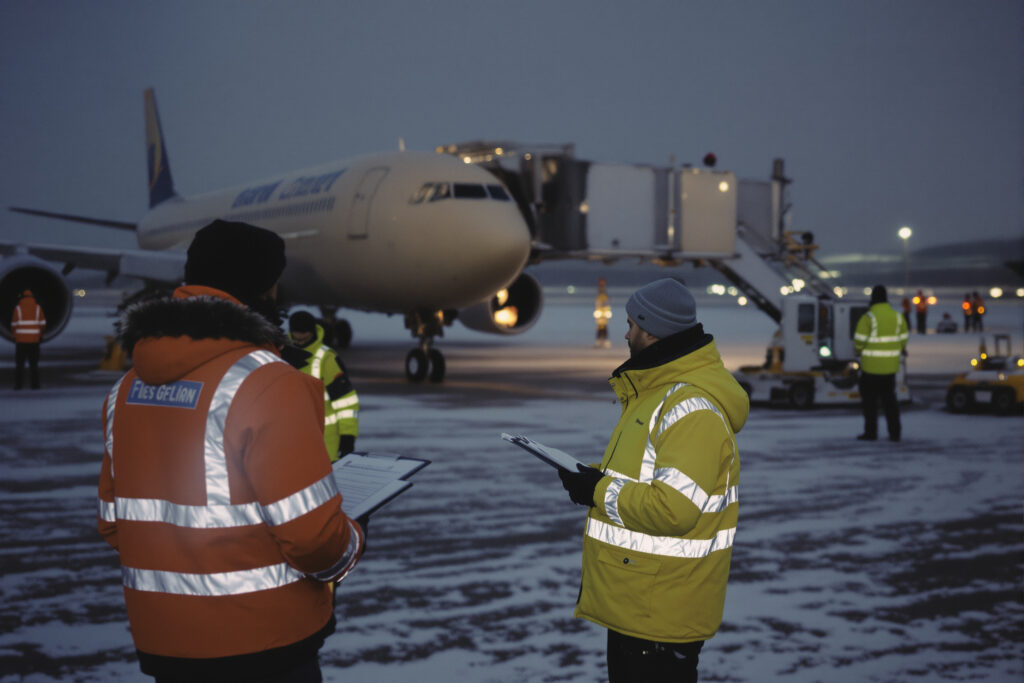
De-icing is a known variable. The downstream chaos is not always treated that way.
Every winter, airlines operating in northern and central Europe build de-icing time into their schedules. Ground crews are briefed, fluids are stocked, and pads are allocated. What gets less attention is what happens when de-icing delays compound across a rotation, spill into crew duty limits, and trigger a wave of disruptions that no single team owns end to end.
De-icing delays are rarely isolated events. A 40-minute hold on a morning departure at a congested hub can push a turnaround past its slot window, force a crew change, delay the inbound aircraft for the next sector, and ultimately ground passengers overnight at a station where your airline has no permanent ground presence. That sequence is not unusual. It is, in fact, one of the more predictable IROPS cascades in winter operations, and yet many airlines continue to manage each step reactively rather than anticipating the chain as a whole.
Where the operational exposure actually sits
The de-icing pad itself is usually managed well. Certified staff, fluid types, holdover time calculations, communication with the flight deck. That part of the process tends to work. The gaps emerge elsewhere.
First, there is the slot recovery problem. After a de-icing delay, aircraft often miss their departure slot. At busy airports, the next available slot can add another significant delay on top of the original one. Operations teams need to decide quickly whether to hold, re-route, or cancel. That decision window is short and often made with incomplete information about downstream effects on crew legality, connecting passengers, and inbound aircraft schedules.
Second, crew duty time becomes a live constraint almost immediately. If de-icing delays push departure late enough, crew members approach their maximum allowable duty hours before the rotation is complete. At that point, the airline needs either a relief crew or a cancellation. Relief crew availability in wintertime, at smaller outstations, is rarely guaranteed. The decision to cancel is often made later than it should be, which compounds the accommodation and transport problem that follows.
Third, passenger communication often lags behind operational reality. Passengers are already at the gate, sometimes already boarded, when the decision to cancel finally comes. At that stage, organizing hotel accommodation and ground transport for a large group, in a city where your airline has no standing agreements, under time pressure and in cold weather, is genuinely difficult. It is also exactly the scenario where costs escalate and where duty-of-care obligations become hardest to fulfill cleanly.
The outstation problem is underweighted in winter planning
Most airlines have reasonably solid IROPS infrastructure at their main hubs. Preferred hotel agreements, transport suppliers, dedicated ops staff who know the local landscape. The exposure in winter is concentrated at outstations: cities where your airline operates one or two daily rotations, where your ground handler is a third party with other clients and limited bandwidth, and where hotel availability during a regional weather event can disappear in hours.
A single de-icing cancellation at a mid-sized airport on a Wednesday evening can strand a full narrow-body load of passengers with nowhere to go. If three other airlines cancel in the same window due to the same weather system, the local hotel supply is absorbed within the first hour of calls. Airlines that do not have pre-positioned capacity agreements, or a partner who can act immediately on their behalf, are left competing for whatever remains.
This is not a theoretical problem. It is the winter reality at dozens of European airports every season. The airlines that handle it better have done the work in advance: mapped their outstation exposure, identified the stations where supply is tightest, and built relationships that function under pressure rather than only during normal operations. Proactive hotel capacity planning for IROPS is one of the foundational differences between an airline that recovers quickly and one that spends the night apologizing.
Ground transport is the piece that falls apart last and costs the most
Once accommodation is secured, moving passengers from the terminal to their hotels in winter conditions adds another layer of complexity. Cold weather, reduced driver availability, and congested airport roads all slow the process. Passengers who have already been waiting for hours become difficult to manage as a group once they are outside a secure terminal environment.
Transport coordination in IROPS is often treated as a logistics afterthought, handled by whoever is still on shift and available to make calls. In practice, it requires the same kind of pre-arranged supply chain that accommodation does. Knowing which transport suppliers in a given city can deploy multiple vehicles on short notice, at night, in January, is knowledge that takes time to build and is not typically sitting in a generic supplier database. A structured ground transport solution designed specifically for disruption scenarios removes that variable from an already pressured operation.
What a practical winter IROPS posture looks like
There is no single configuration that works for every airline, but the common thread among operations teams that handle winter disruptions well is that they have done the planning when the pressure is off, not when snow is already falling.
Practically, this means identifying which outstations carry the highest winter risk based on historical weather patterns and rotation density. It means having accommodation and transport agreements in place at those stations before the season starts, not scrambling to find them during an event. It means setting clear internal triggers for when a de-icing delay becomes a cancellation decision, rather than letting the timeline drift until options are exhausted. And it means ensuring that whoever makes that call has immediate access to an IROPS support structure that can execute the accommodation and transport piece without a long chain of approvals and outbound calls.
Airlines that manage end-to-end disruption support through a specialist partner rather than attempting to coordinate hotels, transport, and passenger communication in-house during a live event consistently recover faster and with fewer secondary complaints. The cost of an unmanaged overnight in an outstation, once you account for accommodation, transport, staff overtime, rebooking costs, and EU261 obligations, is substantially higher than the cost of having that support structured in advance.
If your winter ops review does not include a specific assessment of how de-icing delay cascades are handled beyond the runway, it is worth adding that lens before the season starts. The runway part is solved. The rest of the chain often is not.
For airlines looking to review how their end-to-end disruption support is structured, Duerming’s IROPS management service covers passenger and crew accommodation, ground transport, and 24/7 operational support across Europe.
Ready to be prepared before the next disruption?
Talk to our operations team about a standing IROPS agreement for your airline.