
Slot Recovery After IROPS: The Scheduling Blind Spot That Extends Your Disruption
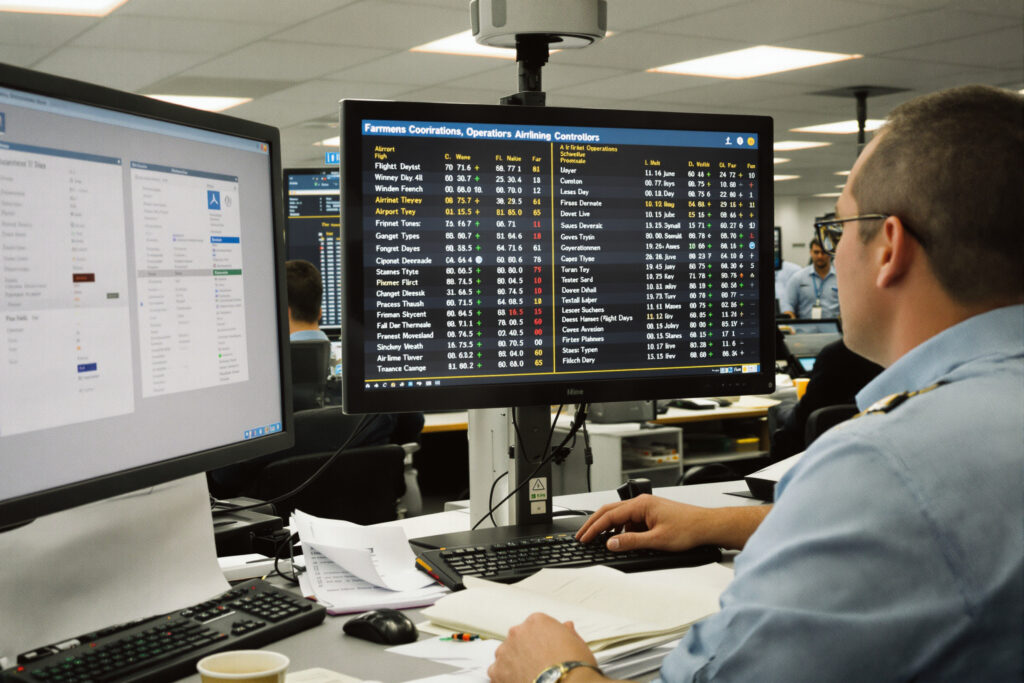
The disruption is over. The damage is not.
There is a common assumption in airline operations that once the cause of a disruption is resolved, recovery begins automatically. The weather clears, the technical issue is signed off, the ATC restriction lifts, and the operation starts moving again. In practice, it rarely works that way.
What actually happens is that a second, quieter crisis begins. Aircraft are out of position. Crew are either approaching or already past their rest limits. Passengers who were accommodated overnight need to be located, transported, and re-boarded. And somewhere in the middle of all of this, someone needs to be negotiating with the slot coordinator to claw back departure windows that were lost hours ago.
This is slot recovery. And it is one of the least-prepared-for phases in disruption management.
Why slot recovery gets treated as someone else’s problem
During an active disruption, the focus is naturally on immediate passenger and crew welfare. Hotels, ground transport, communication, EU261 obligations. These are visible, regulated, and carry direct reputational and financial consequences. Slot recovery, by contrast, feels like it belongs to the scheduling team or the network planning function.
That organisational assumption is where the problem starts.
Slot recovery requires real-time input from multiple departments simultaneously: operations control, crew planning, ground handling, the handling agent at the affected airport, and in many cases an external IROPS partner coordinating passenger movements on the ground. When each of those functions is operating in its own lane, the slot window closes before anyone has agreed on a plan.
At coordinated airports across Europe, which includes most major hubs and a significant number of secondary airports, slots are not held indefinitely once a disruption clears. The parameters for recovering a missed slot are narrow and vary by airport and by season. Operations teams that are not actively working the slot angle from the first moment a disruption is declared often find themselves at the back of a queue that moves quickly.
The knock-on effect most teams underestimate
A single lost slot at a busy hub does not just delay one departure. It repositions the problem downstream. The aircraft that was meant to operate the next rotation is now late. The crew rostered for that flight may be approaching their duty limits. Passengers connecting onward are now at risk of misconnection. And if the disruption happened overnight, you may also be managing the tail end of a hotel accommodation cycle at the same time as trying to recover the slot.
This is why turnaround pressure during IROPS tends to compound rather than ease once a disruption appears to resolve. The visible problem goes away. The scheduling and logistical consequences take hours longer to unwind.
In many cases, the total delay a passenger experiences is not a function of how long the original disruption lasted. It is a function of how fast the operation could realign after the disruption ended. That realignment depends almost entirely on how well-prepared the recovery process was before anything went wrong.
What a prepared slot recovery process actually looks like
Airlines that manage this well share a few common characteristics. They are not necessarily larger or better resourced. They are better organised around the recovery phase specifically.
- They designate a slot recovery owner early. As soon as a disruption is declared, someone is specifically responsible for monitoring and working the slot position at the affected airport. This is not delegated reactively once the disruption clears.
- They maintain direct lines to the airport slot coordinator. Particularly at coordinated European airports, having an established relationship and communication protocol with the slot coordinator matters. Ad hoc calls from operations teams who rarely interact with the coordinator rarely produce fast results.
- They tie passenger and crew readiness into the slot negotiation. There is no point recovering a slot if the passengers are still at a hotel twenty minutes from the terminal or if the crew has just entered a mandatory rest period. Slot recovery only works when the whole operation is aligned around the same departure window.
- They use their IROPS partner as a coordination layer. A capable IROPS partner managing passenger accommodation and ground transport should be feeding readiness information back into the operations centre in real time. If that link is not working, slot recovery becomes guesswork.
The Spain-specific dimension
For airlines operating across Spanish airports, slot recovery after IROPS carries additional complexity. Spain’s network includes a mix of highly coordinated airports and smaller regional ports with different slot management regimes. A disruption that originates at one airport and affects onward rotations through others requires a recovery plan that accounts for each airport’s rules individually, not a single blanket approach.
Airlines managing disruptions in Spain regularly underestimate the ground logistics component of recovery. Passenger accommodation and transport back to the terminal need to move in sequence with the slot window, not independently of it. That kind of coordination benefits from having an IROPS partner with direct local presence and established supplier relationships rather than a centralised operation working remotely. If you want to understand what structured IROPS management across Spanish airports looks like in practice, the detail is available at duerming.com/irops-airports-spain.
Building recovery logic into your disruption plan before you need it
Most airline disruption plans are weighted toward the acute phase: what to do when the problem hits. Slot recovery planning asks a different question: what needs to be in place for the operation to return to schedule as fast as possible once the acute phase ends.
That means pre-agreed communication protocols with slot coordinators at your key airports. It means IROPS partners who understand that passenger and crew readiness information needs to flow back to your operations centre, not just be managed silently on the ground. And it means internal clarity on who owns the recovery clock from the moment a disruption is called.
Disruptions are inevitable. The length of their tail is not. For airlines that want to understand how end-to-end IROPS management can support faster recovery across all phases, duerming.com/irops-management-for-airlines sets out how that works in practice.
Ready to be prepared before the next disruption?
Talk to our operations team about a standing IROPS agreement for your airline.