
Fog Disruptions and IROPS: The Visibility Problem Airlines Keep Mishandling
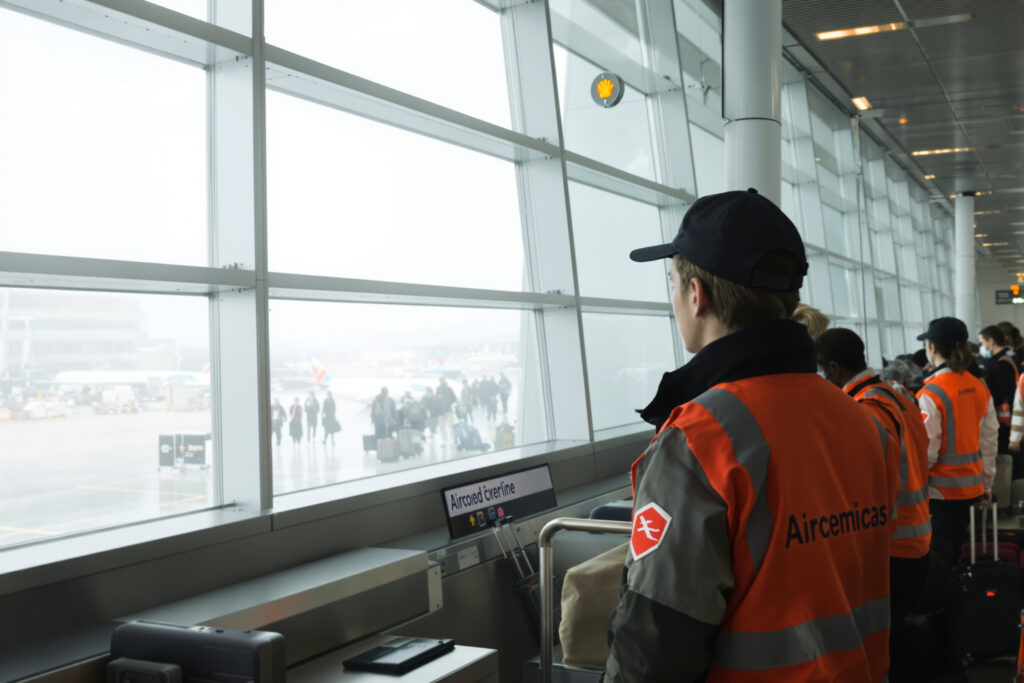
Why Fog Is the IROPS Event Airlines Treat as a Surprise When It Never Should Be
Fog sits in an awkward category for airline operations managers. It is not a sudden mechanical failure. It is not an unforeseeable geopolitical event. Meteorological services often flag low-visibility conditions well ahead of the operational window. And yet, when fog reduces a major European hub to minimum visibility procedures and starts stacking delays across a morning bank of departures, the response in many operations centres looks almost identical to the chaos that follows a genuinely unpredictable event.
That gap between predictability and preparedness is the real problem worth examining.
The False Comfort of “It Will Lift Soon”
The defining characteristic of fog disruptions is that they appear temporary. Unlike a runway closure or a severe storm system, fog carries the implicit promise of resolution. Operations teams often make accommodation and transport decisions based on optimistic lifting windows rather than realistic worst-case timelines.
This leads to a specific failure mode: airlines delay committing to hotel blocks, ground transport arrangements and passenger notifications because they are waiting to see whether the situation resolves. By the time it becomes clear that it will not, the accommodation market at or near the affected airport is already under pressure from every other carrier making the same delayed decision simultaneously.
The result is entirely avoidable. The decision to wait has a cost that is almost always higher than the cost of activating contingency arrangements early and standing some of them down if conditions improve.
How Fog Disruptions Cascade Differently from Other IROPS Events
Fog does not hit a single flight. When an airport moves into low-visibility procedures, approach rates drop, the departure sequence slows, and delays compound across an entire schedule. By mid-morning, you are not managing one or two disrupted services. You are managing a wave of delayed and eventually cancelled flights across multiple carriers, all drawing on the same local accommodation and transport resources at the same time.
This market compression effect is one of the most underestimated aspects of fog-related IROPS. Hotels within reasonable distance of large European airports have finite inventory. When several airlines activate accommodation needs simultaneously, available room rates move quickly and room availability drops. Airlines without pre-negotiated arrangements or a supplier with standing local contracts find themselves at the back of a very long queue.
Ground transport follows the same pattern. Coach and minibus availability near busy hubs is not unlimited, and when multiple airlines are moving passengers to hotels at the same time, uncoordinated requests create bottlenecks that extend already difficult passenger experiences. If you want to understand how transport decisions break down under exactly this kind of pressure, the post on ground transport during IROPS covers this in practical detail.
The Passenger Communication Problem in Fog Events
Fog disruptions create a specific communication challenge because the duration is genuinely uncertain. Telling passengers that their flight is delayed due to weather is accurate. It is also nearly useless from a planning perspective for anyone who needs to decide whether to stay at the airport, eat a meal, arrange alternative transport or find somewhere to sleep.
What passengers actually need is a clear decision framework from the airline: at what point will accommodation be provided, how will they be notified, where do they go and what do they do in the meantime. Without this, passengers sit in terminals for extended periods with incomplete information, which generates complaints, compensation claims and reputational damage that outlasts the fog itself.
Operations teams need to establish clear internal triggers. If a delay is projected to exceed a defined threshold, the accommodation and transport process should activate automatically, not wait for further escalation. The trigger should be based on operational data, not on a manager hoping the fog lifts.
Crew Considerations That Often Get Overlooked
When fog causes extended delays across a morning or afternoon bank of flights, crew duty time limits become a live operational problem. Crews that were scheduled to operate services that are now delayed by several hours may reach the limits of their duty window before the aircraft is ready to depart. This means you are not only managing passenger accommodation but also crew rest requirements, replacement crew positioning and the downstream schedule impact on subsequent services those crews were due to operate.
Crew accommodation during fog events needs the same early-trigger logic as passenger accommodation. Waiting until a crew member is legally required to rest before identifying a hotel room is too late, particularly in a market where availability is already compressed by the same disruption event. Duerming provides dedicated crew accommodation and transport arrangements designed to respond within the tight timelines that IROPS events impose.
What Prepared Airlines Do Differently
Airlines that handle fog disruptions well tend to share a few operational habits that are worth making explicit.
- They treat fog forecasts as activation signals, not monitoring signals. When meteorological data indicates a meaningful probability of low-visibility conditions at a key hub, contingency suppliers are alerted in advance rather than called reactively once delays are already running.
- They have pre-agreed accommodation blocks that can be released. Standing arrangements with hotels near major airports, with clear release windows, mean the airline has rooms available without competing in a compressed spot market.
- They separate passenger and crew logistics from the outset. Trying to manage both through the same communication channel or the same contact at a supplier creates confusion and delays both processes.
- They set internal escalation timelines before the event, not during it. The decision point at which accommodation is confirmed, at which passengers are notified and at which transport is dispatched should be defined in a protocol, not improvised by whoever is on shift.
The Systemic Gap That Fog Exposes
Fog disruptions are useful to examine not because they are uniquely complex but because they reveal something specific about how IROPS preparedness tends to work in practice. Airlines invest significant effort in planning for severe or unusual disruption scenarios. The more routine, foreseeable disruption types often receive less structured treatment precisely because they feel manageable.
The operational lesson is that the events you can see coming are the ones where your preparation has the highest return. A structured response to fog does not require significant resources. It requires defined triggers, pre-established supplier relationships and a clear internal protocol. The absence of those things, not the fog itself, is what turns a foreseeable weather event into a passenger care failure.
If you want to understand how end-to-end IROPS management works in practice, including supplier coordination, accommodation logistics and real-time response, the overview of IROPS management for airlines explains how Duerming approaches these situations across the European network it has built since 2007.
Ready to be prepared before the next disruption?
Talk to our operations team about a standing IROPS agreement for your airline.